470.01
In the closest packing of spheres, there are only two symmetric shapes occurring in the spaces between the spheres. They are what we call the concave octahedron and the concave vector equilibrium. One is an open condition of the vector equilibrium and the other is a contracted one of the octahedron. If we take vector equilibria and compact them, we find that the triangular faces are occupying a position in closest packing of a space and that the square faces are occupying the position in closest packing of a sphere. (For a further exposition of the interchange between spheres and spaces, see illustrations at Sec. 1032, “Convex and Concave Sphere Packing Voids.”)
470.02
Fig. 470.02A Role of Tetrahedra and Octahedra in Vector Equilibrium
\
Fig. 470.02A Role of Tetrahedra and Octahedra in Vector Equilibrium:
Link to original
A. Positive-negative tetrahedron system.
B. Vector equilibrium formed by four positive-negative tetrahedron systems with common central vertex and coinciding radial edges. Equilibrium of system results from positive-negative action of double radial vectors.
C. The relationship of space-filling tetrahedra and octahedra to the vector equilibrium defined by eight radially disposed tetrahedra.
Fig. 470.02B Relationship of Vector Equilibrium to Cube and Octahedron
Fig. 470.02B. Relationship of Vector Equilibrium to Cube and Octahedron:
Link to original
A. Joining and interconnecting the midpoints of tetrahedron edges results in the octahedron. Joining and interconnecting the midpoints of the octahedron edges results in the vector equilibrium.
B. Relationship of the vector equilibrium to cube.
C. Relationship of vector equilibrium to octahedron.
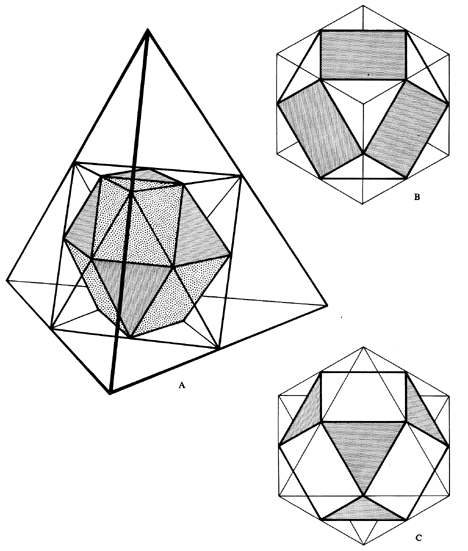
Fig. 470.02C Transformation of Vector Equilibrium and Octahedron as Space-Filling Jitterbug
Fig. 470.02C Transformation of Vector Equilibrium and Octahedron as Space-Filling Jitterbug: Because the vector equilibrium and the octahedron will fill space, it is possible to envision a space- filling “jitterbug” transformation. If we combine vector equilibrium on their square faces in a space- filling “jitterbug” arrangement, the triangular faces form octahedral voids (1). As the vector equilibria contract, just as in the single “jitterbug,” they transform through the icosahedron phase (3) and end at the octahedron phase (5).
Link to original
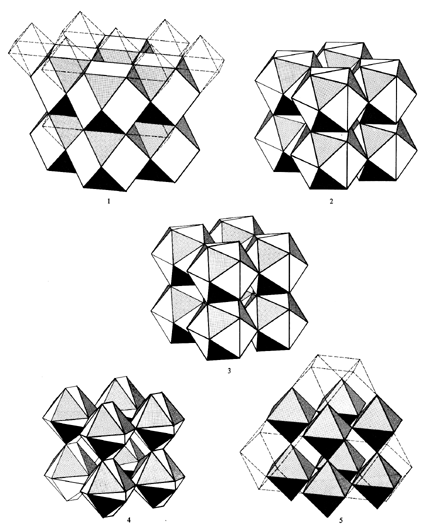
Fig. 470.02D Reciprocity of Vector Equilibrium and Octahedra in Space-Filling Jitterbug
Fig. 470.02D Reciprocity of Vector Equilibrium and Octahedra in Space-Filling Jitterbug: In the space-filling “jitterbug” transformation, the vector equilibria contract to become octahedra, and, because in space filling array there are equal numbers of octahedra and vector equilibria, the original octahedra expand and ultimately become vector equilibria. There is a complete change of the two figures.
Link to original
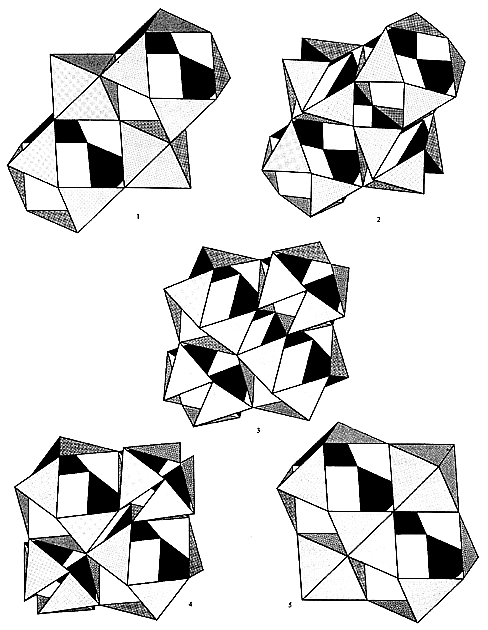
When we compact vector equilibria with one another, we find that two of their square faces match together. Within a square face, we have a half octahedron; so bringing two square faces together produces an internal octahedron between the two of them. At the same time, a set of external octahedra occurs between the triangular faces of the adjacent vector equilibria.