935.00 Octahedron as Conservation and Annihilation Model
[935.00-938.16 Annihilation Scenario]
935.10 Energy Flow and Discontinuity
935.11
Though classic science at the opening of the 18th century had achieved many remarkably accurate observations and calculations regarding the behaviors of light, individual scientists and their formal societies—with one notable exception-remained unaware that light (and radiation in general) has a speed. Ole Roemer (1644—1710), both Royal Astronomer and Royal Mathematician of Denmark, was that exception. Roemer’s observations of the reflected light of the revolving moons of the planet Jupiter made him surmise that light has a speed. His calculations from the observed data very closely approximated the figure for that speed as meticulously measured in vacuo two centuries later, in the Michelson-Morley experiment of 1887. Though Roemer was well accredited by the scientists and scientific societies of Europe, this hypothesis of his seemed to escape their cosmological considerations. Being overlooked, the concept did not enter into any of the cosmological formulations (either academic or general) of humanity until the 20th century.
935.12
Until the 20th century scientists in general assumed the light of all the stars to be instantaneously and simultaneously extant. Universe was an instantaneous and simultaneous system. The mid-19th-century development of thermodynamics, and in particular its second law, introduced the concept that all systems always lose energy and do so in ever-increasingly disorderly and expansive ways. The academicians spontaneously interpreted the instantaneity and simultaneity of Universe as requiring that the Universe too must be categorized as a system; the academicians assumed that as a system Universe itself must be losing energy in increasingly expansive and disorderly ways. Any expenditure of energy by humans on Earth—to whom the stars in the heavens were just so much romantic scenery; no more, no less—would hasten the end of the Universe. This concept was the foundation of classical conservatism—economic, political, and philosophical. Those who “spent” energy were abhorred.
935.13
This viewpoint was fortified by the hundred-years-earlier concept of classical science’s giant, Isaac Newton, who in his first law of motion stated that all bodies persist in a state of rest, or in a line of motion, except as affected by other bodies. This law posits a cosmic norm of at rest: change is abnormal. This viewpoint as yet persists in all the graphic-chart coordinates used by society today for plotting performance magnitudes against a time background wherein the baseline of “no change” is the norm. Change is taken spontaneously as being inherently abnormal and is as yet interpreted by many as being cause for fundamental social concern.
935.14
With the accurate measurement, in 1887, of the speed of light in vacuo, science had comprehensively new, experimentally redemonstrable challenges to its cosmogony and cosmology. Inspired by the combined discoveries of the Brownian movement, black body radiation, and the photon of light, Einstein, Planck, and others recognized that energy-as-radiation has a top speed—ergo, is finitely terminaled—but among them, Einstein seems to have convinced himself that his own cosmological deliberations should assume Boltzmann’s concept to be valid—ergo, always to be included in his own exploratory thoughts. There being no experimental evidence of energy ever being created or lost, universal energy is apparently conserved. Wherefore Boltzmann had hypothesized that energy progressively and broadcastingly exported from various localities in Universe must be progressively imported and reassembled at other localities in Universe.
935.15
Boltzmann’s concept was analogous to that upon which was developed the theory and practice of the 20th-century meteorological weather forecasting, which recognizes that our terrestrial atmosphere’s plurality of high-pressure areas are being progressively exhausted at different rates by a plurality of neighboring low-pressure areas, which accumulate atmospheric molecules and energy until they in turn become new high- pressure areas, which are next to be progressively exhausted by other newly initiated low- pressure areas. The interpatterning of the various importing-exporting centers always changes kaleidoscopically because of varying speeds of moisture formation or precipitation, speeds and directions of travel, and local thermal conditions.
935.16
Though they did not say it that way, the 20th-century leaders of scientific thinking inferred that physical Universe is apparently eternally regenerative.
935.17
Einstein assumed hypothetically that energies given off omnidirectionally with the ever-increasing disorder of entropy by all the stars were being antientropically imported, sorted, and accumulated in various other elsewheres. He showed that when radiant energy interferes with itself, it can, and probably does, tie itself precessionally into local and orderly knots. Einstein must have noted that on Earth children do not disintegrate entropically but multiply their hydrocarbon molecules in an orderly fashion; little saplings grow in an orderly way to become big trees. Einstein assumed Earthian biology to be reverse entropy. (This account does not presume to recapitulate the actual thought processes of Einstein at any given point in the development of his philosophy; rather it attempts to illustrate some of the inevitable conclusions that derive from his premises.)
935.18
What made it difficult for scientists, cosmologists, and cosmogonists to comprehend about Boltzmann’s concept—or Einstein’s implicit espousal of it—was the inherent discontinuity of energy events implicit in the photon as a closed-system package of energy. What happened to the energy when it disappeared? For disappear it did. How could it reappear elsewhere in a discontinuous system?
935.20 Precessional Transformation in Quantum Model
935.21
One quantum of energy always consists of six energy vectors, each being a combined push-pull, positive-negative force. (See Secs. 600.02 through 612.01 and Fig. 620.06.) Twelve unique forces: six plus and six minus. Six vectors break into two sets of three each. Classical engineers assumed that each action had its equal and opposite reaction at 180 degrees; but since the discovery of the speed of light and the understanding of nonsimultaneity, we find that every action has not only a reaction but also a resultant. Neither the reaction nor the resultant are angularly “opposite” in 180- degree azimuth from the direction of action. The “equal and opposite” of classical engineering meant that both action and reaction occurred in opposite directions in the same straight line in the same geometrical plane. But since the recognition of nonsimultaneity and the speed of light, it has been seen that action, reaction, and resultant vectors react omnidirectionally and precessionally at angles other than 180 degrees. (See Fig. 511.20.)
935.22
As we enter the last quarter of the 20th century, it is recognized in quantum mechanics and astrophysics that there could never have existed the traditionally assumed, a priori universal chaos, a chaos from which it was also assumed that Universe had escaped only by the workings of chance and the long-odds-against mathematical probability of a sequence of myriad-illions of coincidences, which altogether produced a universal complex of orderly evolutionary events. This nonsense was forsaken by the astrophysicists only a score of years ago, and only because science has learned in the last few decades that both the proton and the neutron always and only coexist in a most orderly interrelationship. They do not have the same mass, and yet the one can be transformed into the other by employing both of their respective two energy side effects; i.e., those of both the proton and the neutron. Both the proton and the neutron have their respective and unique two-angle-forming patterns of three interlinked lines, each representing their action, reaction, and resultant vectors.
935.221
Coming-Apart Phase: Coming-Apart Limit: The astrophysicists say that no matter how far things come apart, fundamentally they never come farther apart than proton and neutron, which always and only coexist.
935.23
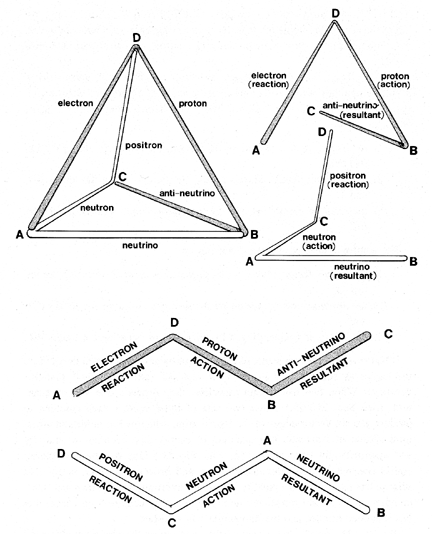
Fig. 935.23 Proton and Neutron Three-vector Teams
Fig. 935.23 Proton and Neutron Three-vector Teams: The proton and neutron always and only coexist as action vectors of half-quanta associable as quantum.
Link to originalThe names of the players, the positions they play, and the identifying letters they wear on the three-vector teams of proton and neutron, respectively, are identified as follows. The proton’s three-vector team consists of
- the action vector, played by its captain, the proton, wearing the letters BD;
- the reaction vector, played by the electron, wearing the letters AD; and
- the resultant vector, played by the antineutrino, wearing the letters BC.
The neutron’s three-vector team consists of- the action vector, played by its captain, the neutron, wearing the letters A C;
- the reaction vector, played by the positron, wearing the letters CD; and
- the resultant vector, played by the neutrino, wearing the letters AB.
Either one of these two teams of three-vector events is identified in quantum mechanics as being a half-quantum (or one-half spin or one-half Planck’s constant). When two half- quanta associate, they produce one unit of quantum. (See Sec. 240.65.) These two sets of three vectors each combine to produce the six vector edges of the tetrahedron, which is the minimum structural system of Universe: one quantum of energy thus becomes structurally and systematically conceptual. (See Fig. 935.23.) One quantum of energy equals one tetrahedron. Humanist writers and broadcasters take notice that science has regained conceptuality. Science’s intertransformabilities and intercomplementarities are modelably demonstrable. The century-long chasm that has separated science and the humanities has vanished.935.24
The tetrahedral model of the quantum as the minimum structural system of Universe is a prime component in producing the conceptual bridge to span the vast chasm identified by C. P. Snow as having for so long existed between the one percent of the world people who are scientists and the 99 percent of humanity comprehendingly communicated with by the writers in literature and the humanities. This chasm has been inadvertently sustained by the use of an exclusively mathematical language of abstract equations on the part of scientists, thus utterly frustrating the comprehension of the scientists’ work by the 99 percent of humanity that does not communicate mathematically. This book, Synergetics, contains the conceptualizing adequate to the chasm-bridging task, and it does so in vectorially structured geometry and in exclusively low-order prime numbers in rational whole-number accounting.
935.25
As an instance of chasm-spanning between science and the humanities by conceptually transformative energy-quanta accounting, synergetics conceptually elucidates the Boltzmann import-export, entropy-syntropy transaction and the elegant manner in which nature accommodates the “hidden ball” play of now-you-see-it-now-you-don’t energy transference.
936.00 Volumetric Variability with Topological Constancy
936.10 Symmetrical and Asymmetrical Contraction
936.11
An octahedron consists of 12 vector edges and two units of quantum and has a volume of four when the tetrahedron is taken as unity. (See Table 223.64.) Pulling two ends of a rope in opposite directions makes the rope’s girth contract precessionally in a plane at 90 degrees to the axis of purposeful tensing. (Sec. 1054.61.) Or if we push together the opposite sides of a gelatinous mass or a pneumatic pillow, the gelatinous mass or the pneumatic pillow swells tensively outward in a plane at 90 degrees to the line of our purposeful compressing. This 90-degree reaction—or resultant—is characteristic of precession. Precession is the effect of bodies in motion upon other bodies in motion. The gravitational pull of the Sun on the Earth makes the Earth go around the Sun in an orbit at degrees to the line of the Earth-Sun gravitational interattraction. The effect of the Earth on the Moon or of the nucleus of the atom upon its electron is to make these interattractively dependent bodies travel in orbits at 90 degrees to their mass- interattraction force lines.
936.12
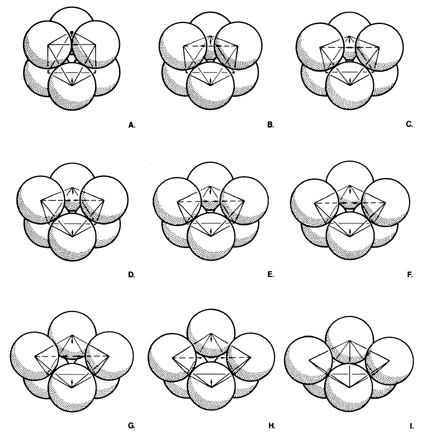
Fig. 936.12 Octahedron as Conservation and Annihilation Model
Fig. 936.12 Octahedron as Conservation and Annihilation Model: If we think of the octahedron as defined by the interconnections of six closest-packed spheres, gravitational pull can make one of the four equatorial vectors disengage from its two adjacent equatorial vertexes to rotate 90 degrees and rejoin the north and south vertexes in the transformation completed as at I. (See color plate 6.)
Link to originalThe octahedron represents the most commonly occurring crystallographic conformation in nature. (See Figs. 931.10 and 1054.40.) It is the most typical association of energy-as-matter; it is at the heart of such association. Any focused emphasis in the gravitational pull of the rest of the Universe upon the octahedron’s symmetry precesses it into asymmetrical deformation in a plane at 90 degrees to the axis of exaggerated pulling. This forces one of the 12 edge vectors of the octahedron to rotate at 90 degrees. If we think of the octahedron’s three XYZ axes and its six vertexes, oriented in such a manner that X is the north pole and X’ is the south pole, the other four vertexes—Y, Z, Y’, Z’—all occur in the plane of, and define, the octahedron’s equator. The effect of gravitational pull upon the octahedron will make one of the four equatorial vectors disengage from its two adjacent equatorial vertexes, thereafter to rotate 90 degrees and then rejoin its two ends with the north pole and south pole vertexes. (See Fig. 936.12 and color plate 6.)
936.13
When this precessional transformation is complete, we have the same topological inventories of six vertexes, eight exterior triangular faces, and 12 vector edges as we had before in the symmetrical octahedron; but in the process the symmetrical, four- tetrahedra-quanta-volume octahedron has been transformed into three tetrahedra (three- quanta volume) arranged in an arc section of an electromagnetic wave conformation with each of the two end tetrahedra being face bonded to the center tetrahedron. (See Sec. 982.73)
936.14
The precessional effect has been to rearrange the energy vectors themselves in such a way that we have gone from the volume-four quanta of the symmetrical octahedron to the volume-three quanta of the asymmetric tetra-arc-array segment of an electromagnetic wave pattern. Symmetric matter has been entropically transformed into asymmetrical and directionally focused radiation: one quantum of energy has seemingly disappeared. When the radiation impinges interferingly with any other energy event in Universe, precession recurs and the three-quantum electromagnetic wave retransforms syntropically into the four-quantum octahedron of energy-as-matter. And vice versa. Q.E.D. (See Fig. 936.14.)
936.15
The octahedron goes from a volume of four to a volume of three as one tensor is precessed at 90 degrees. This is a demonstration in terms of tension and compression of how energy can disappear and reappear. The process is reversible, like Boltzmann’s law and like the operation of syntropy and entropy. The lost tetrahedron can reappear and become symmetrical in its optimum form as a ball-bearing-sphere octahedron. There are six great circles doubled up in the octahedron. Compression is radiational: it reappears. Out of the fundamental fourness of all systems we have a model of how four can become three in the octahedron conservation and annihilation model.
936.16
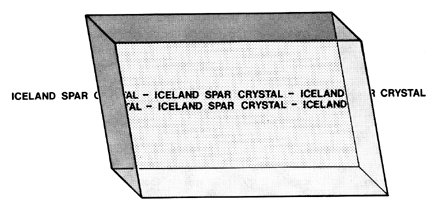
Fig. 936.16 Iceland Spar Crystal
Fig. 936.16 Iceland Spar Crystal: Double vector image.
Link to originalSee the Iceland spar crystals for the octahedron’s double vector-edge image.
936.17
The interior volume of the concave-vector-equilibrium-shaped space occurring interiorly between the six uniradius octahedral collection of closest-packed spheres is greater than is the concave-octahedrally-shaped space occurring interiorly between the four uniradius tetrahedral collection of closest-packed spheres, which tetrahedral collection constitutes the minimum structural system in Universe, and its interior space is the minimum interior space producible within the interstices of closest- packed uniradius spheres.
936.18
Thus the larger interior space within the omnitriangularly stable, six-vertex- ball, 12-vector-edge octahedron is subject to volumetric compressibility. Because its interior space is not minimal, as the octahedron is omniembracingly tensed gravitationally between any two or more bodies, its six balls will tend precessionally to yield transformingly to produce three closest-packed, uniradius, sphere-vertex-defined, face- bonded tetrahedra.
936.19
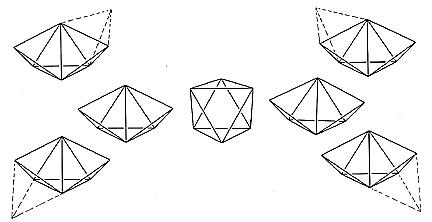
Fig. 936.19 Tetrahedral Quantum is Lost and Reappears in Transformation between Octahedron and Three-tetra-arc Tetrahelix
Fig. 936.19 Tetrahedral Quantum is Lost and Reappears in Transformation between Octahedron and Three-tetra-arc Tetrahelix: This transformation has the precessional effect of rearranging the energy vectors from 4-tetravolumes to 3-tetravolumes and reverse. The neutral symmetric octahedron rearranges itself into an asymmetric embryonic wave pattern. The four-membered individual-link continuity is a potential electromagnetic-circuitry gap closer. The furthermost ends of the tetra-arc group are alternatively vacant. (See also color plate 6.)
Link to originalAs we tense the octahedron, it strains until one vector (actually a double, or unity-as-two, vector) yields its end bondings and precesses at 90 degrees to transform the system into three double-bonded (face-bonded) tetrahedra in linear arc form. This tetra- arc, embryonic, electromagnetic wave is in neutral phase. The seemingly annihilated—but in fact only separated-out-quantum is now invisible because vectorless. It now becomes invisibly face-bonded as one invisible tetrahedron. The separated-out quantum is face- bonded to one of the furthermost outward triangular faces occurring at either end of the tetra-arc array of three (consisting of one tetra at the middle with each of the two adjacent tetra face-bonded to it); the fourth invisible tetrahedron is face-bonded to one or the other of the two alternatively vacant, alternatively available furthermost end faces of the tetra- arc group. With this fourth, invisible tetrahedral addition the overall triple-bonded tetrahedral array becomes either rightwardly or leftwardly spiraled to produce a four- tetrahedron tetrahelix, which is a potential, event embryo, electromagnetic-circuitry gap closer. Transmission may thereafter be activated as a connected chain of the inherently four-membered, individual-link continuity. This may explain the dilemma of the wave vs the particle. (See Sec. 973.30, Fig. 936.19, and color plates 6 and 7.)
936.20 Conceptual Conservation and Annihilation
936.21
The octahedron as the conservation and annihilation model provides an experiential and conceptual accounting for the question: What happens to entropically vanishing quanta of energy that have never been identified as discretely lost when new quanta appeared elsewhere and elsewhen? Were these appearing and disappearing quanta being encountered for the first time as we became capable of penetrating exploration of ever vaster ranges of Universe?
936.22
Boltzmann hypothesized and Einstein supported his working assumption—stated in the conceptual language of synergetics—that there can be no a priori stars to radiate entropically and visibly to the information-importing, naked eyes of Earthian humans (or to telescopes or phototelescopy or electromagnetic antennae) if there were not also invisible cosmic importing centers. The importing centers are invisible because they are not radiantly exporting; they are in varying stages of progressive retrieving, accumulating, sorting, storing, and compressing energies. The cosmic abundance of the myriads of such importing centers and their cosmic disposition in Scenario Universe exactly balances and conserves the integrity of eternally regenerative Universe.
936.23
In Scenario Universe (in contrast to a spherically-structured, normally-at- rest, celestially-concentric, single-frame-picture Universe) the episodes consist only of such frequencies as are tune-in-able by the limited-frequency-range set of the viewer.
936.24
There is no such phenomenon as space: there is only the at-present-tuned-in set of relationships and the untuned intervalling. Points are twilight-border-line, only amplitude-tuned-in (AM), directionally oriented, static squeaks or pips that, when frequency-tuned (FM), become differentially discrete and conceptually resolvable as topological systems having withinness and withoutness—ergo, at minimum having four corner-defining yet subtunable system pips or point-to-able corner loci. In systemic cosmic topology Euler’s vertexes (points) are then always only twilight energy-event loci whose discrete frequencies are untunable at the frequency range of the reception set of the observer.
937.00 Geometry and Number Share the Same Model
937.10 Midway Between Limits
937.11
The grand strategy of quantum mechanics may be described as progressive, numerically rational fractionating of the limit of total energy involved in eternally regenerative Universe.
937.12
When seeking a model for energy quanta conservation and annihilation, we are not surprised to find it in the middle ranges of the geometrical hierarchy of prime structural systems—tetrahedron, octahedron, and icosahedron (see Sec. 610.20). The tetrahedron and icosahedron are the two extreme and opposite limit cases of symmetrical structural systems: they are the minimum-maximum cosmic limits of such prime structures of Universe. The octahedron ranks in the neutral area, midway between the extremes.
937.13
The prime number characteristic of the tetrahedron is 1; the prime number characteristic of the icosahedron is 5. Both of these prime numbers—1 and 5—are odd numbers, in contradistinction to the prime number characteristic of the middle-case structural-system octahedron, which is 2, an even number and the only even numbered prime number. Again, we are not surprised to find that the octahedron is the most common crystal conformation in nature.
937.14
The tetrahedron has three triangles around each vertex; the octahedron has four; and the icosahedron has five. The extreme-limit cases of structural systems are vertexially locked by odd numbers of triangular gears, while the vertexes of the octahedron at the middle range have an even number of reciprocating triangular gears. This shows that the octahedron’s three great circles are congruent pairs—i.e., six circles that may seem to appear as only three, which quadrivalent doubling with itself is clearly shown in the jitterbug model, where the 24 vector edges double up at the octahedron phase to produce 12 double-congruent vector edges and thus two congruent octahedra. (See Fig. 460.08D.)
937.15
The octahedron is doubled-up in the middle range of the vector equilibrium’s jitterbug model; thus it demonstrates conceptually the exact middle between the macro- micro limits of the sequence of intertransformative events. The octahedron in the middle of the structural-system hierarchy provides us with a clear demonstration of how a unit quantum of energy seemingly disappears—i.e., becomes annihilated—and vice versa.
937.20 Doubleness of Octahedron
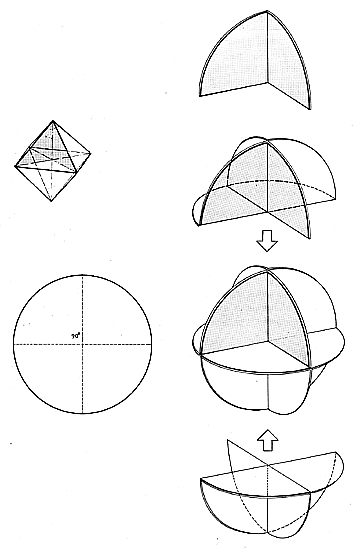
Fig. 937.20 Six-great-circle Spherical Octahedron
Fig. 937.20 Six-great-circle Spherical Octahedron: The doubleness of the octahedron is illustrated by the need for two sets of three great circles to produce its spherical foldable form.
Link to original937.21
The octahedron always exhibits the quality of doubleness. When the octahedron first appears in the symmetrical contraction of the vector equilibrium jitterbug system, it appears with all of its vectors doubled (see Fig. 460.08D). It also takes two sets of three great circles each to fold the octahedron. You might think you could do it with one set of three great circles, but the foldability of the octahedron requires two sets of three great circles each. (See Secs. 835 and 836.) There are always six great circles doubled up in the octahedron to reappear only as three. (See Fig. 937.20.)
937.22
And we also recall that the octahedron appears as the prime number 2 in the geometrical hierarchy, while its volume is 4 when the tetrahedron is taken as volumetric units (see Table 223.64).
The tetrahedron’s prime number identity is 1
The octahedron’s prime number identity is 2
Both cubes and rhombic dodecahedra are 3
And icosahedra and vector equilibria are 5
They first occur volumetrically, respectively, as
937.30 Octahedron as Sphere of Compression
937.31
The slenderness ratio in gravitationally tensed functioning has no minimum overall limit of its structural-system length, as compared to the diameter of the system’s midlength cross section; ergo,
In crystalline compression structures the column length minimum limit ratio is 40/1. There may be a length/diameter compression-system-limit in hydraulics, but we do not as yet know what it is. The far more slender column/diameter ratio attainable with hydraulics permits the growth of a palm tree to approach the column/diameter ratio of steel columns. We recognize the sphere—the ball bearing, the spherical island— column/diameter = 1/1 constituting the optimal, crystalline, compressive-continuity, structural-system model. (See Fig. 641.01.) The octahedron may be considered to be the optimum crystalline structural representation of the spherical islands of compression because it is double-bonded and its vectors are doubled
938.00 Jitterbug Transformation and Annihilation
938.10 Positive and Negative Tetrahedra
938.11
The tetrahedron is the minimum-limit-case structural system of Universe (see Secs. 402 and 620). The tetrahedron consists of two congruent tetrahedra: one concave, one convex. The tetrahedron divides all of Universe into all the tetrahedral nothingness of all the cosmic outsideness and all the tetrahedral nothingness of all the cosmic insideness of any structurally conceived or sensorially experienced, special case, uniquely considered, four-starry-vertex-constellared, tetrahedral system somethingness of human experience, cognition, or thinkability.
938.12
The tetrahedron always consists of four concave-inward hedra triangles and of four convex-outward hedra triangles: that is eight hedra triangles in all. (Compare Fig. 453.02.) These are the same eight—maximally deployed from one another—equiangular triangular hedra or facets of the vector equilibrium that converge to differential inscrutability or conceptual zero, while the eight original triangular planes coalesce as the four pairs of congruent planes of the zero-volume vector equilibrium, wherein the eight exterior planes of the original eight edge-bonded tetrahedra reach zero-volume, eightfold congruence at the center point of the four-great-circle system. (Compare Fig. 453.02.)
938.13
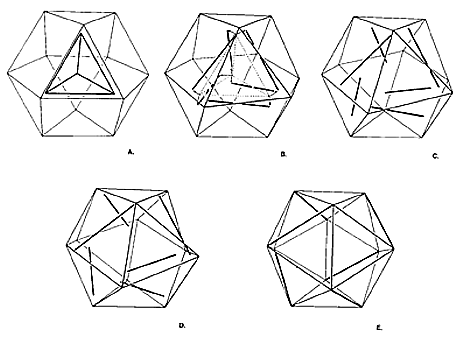
Fig. 938.13 Six Vectors of Additional Quantum Vanish and Reappear in Jitterbug Transformation Between Vector Equilibrium and Icosahedron
Fig. 938.13 Six Vectors of Additional Quantum Vanish and Reappear in Jitterbug Transformation Between Vector Equilibrium and Icosahedron: The icosahedral stage in accommodated by the annihilation of the nuclear sphere, which in effect reappears in transformation as six additional external vectors that structurally stabilize the six “square” faces of the vector equilibrium and constitute an additional quantum package. (See also color plate 7.)
Link to originalThe original—only vertexially single-bonded, vectorially structured—triangles of the vector-equilibrium jitterbug transform by symmetrical contraction from its openmost vector-equilibrium state, through the (unstable-without-six- additional-vector inserts; i.e., one vectorial quantum unit) icosahedral stage only as accommodated by the nuclear sphere’s annihilation, which vanished central sphere reappears transformedly in the 30-vector-edged icosahedron as the six additional external vectors added to the vector equilibrium to structurally stabilize its six “square” faces, which six vectors constitute one quantum package. (See Fig. 938.13.)
938.14
Next the icosahedron contracts symmetrically to the congruently vectored octahedron stage, where symmetrical contraction ceases and precessional torque reduces the system to the quadrivalent tetrahedron’s congruent four positive and four negative tetrahedra. These congruent eight tetrahedra further precess into eight congruent zero- altitude tetrahedral triangles in planar congruence as one, having accomplished this contraction from volume 20 of the vector equilibrium to volume 0 while progressively reversing the vector edges by congruence, reducing the original 30 vector edges (five quanta) to zero quanta volume with only three vector edges, each consisting of eight congruent vectors in visible evidence in the zero-altitude tetrahedron. And all this is accomplished without ever severing the exterior, gravitational-embracing bond integrity of the system. (See Figs. 461.08 and 1013.42.)
938.15
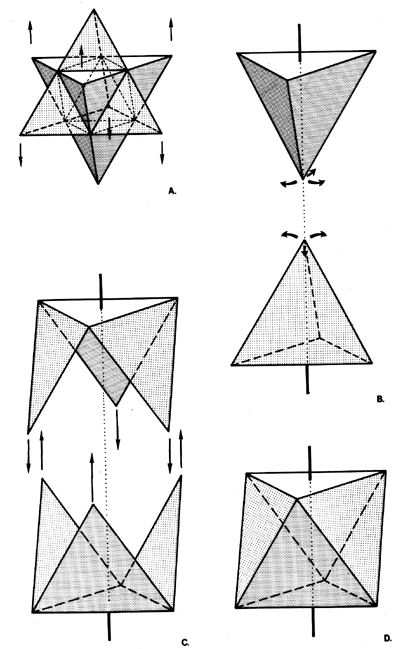
Fig 938.15 Two Tetrahedra Open Three Petal Faces and Precess to Rejoin as Octahedron.
Fig 938.15 Two Tetrahedra Open Three Petal Faces and Precess to Rejoin as Octahedron.
Link to originalThe octahedron is produced by one positive and one negative tetrahedron. This is done by opening one vertex of each of the tetrahedra, as the petals of a flower are opened around its bud’s vertex, and taking the two open-flowered tetrahedra, each with three triangular petals surrounding a triangular base, precessing in a positive-negative way so that the open triangular petals of each tetrahedron approach the open spaces between the petals of the other tetrahedron, converging them to produce the eight edge-bonded triangular faces of the octahedron. (See Fig. 938.15.)
938.16
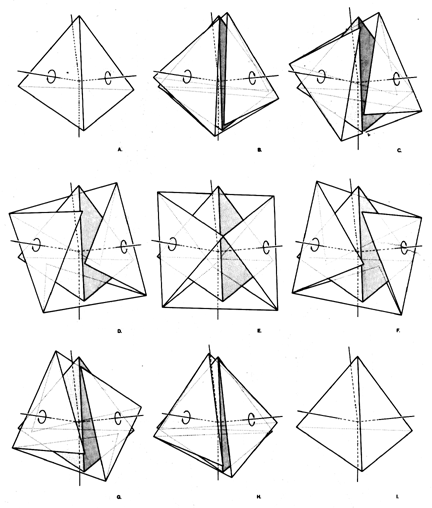
Fig. 938.16 Octahedron Produced from Precessed Edges of Tetrahedron
Fig. 938.16 Octahedron Produced from Precessed Edges of Tetrahedron: An octahedron may be produced from a single tetrahedron by detaching the tetra edges and precessing each of the faces 60 degrees. The sequence begins at A and proceeds through BCD at arrive at E with an octahedron of four positive triangular facets interspersed symmetrically with four empty triangular windows. From F through I the sequence returns to the original tetrahedron.
Link to originalBecause the octahedron can be produced by one positive and one negative tetrahedron, it can also be produced by one positive tetrahedron alone. It can be produced by the four edge-bonded triangular faces of one positive tetrahedron, each being unbonded and precessed 60 degrees to become only vertex-interbonded, one with the other. This produces an octahedron of four positive triangular facets interspersed symmetrically with four empty triangular windows. (See Fig. 938.16.)
Link to original